

Ink adhesion problems are common in plastic film printing. In the plastic film printing industry, a 3M tape test is commonly used to check ink adhesion. The test involves pressing the tape firmly onto the test area, covering at least 15 square centimeters. The tape is then pulled off quickly. The same spot is tested twice, and if ink peeling is less than 10% of the tested area, it is considered within the normal range.
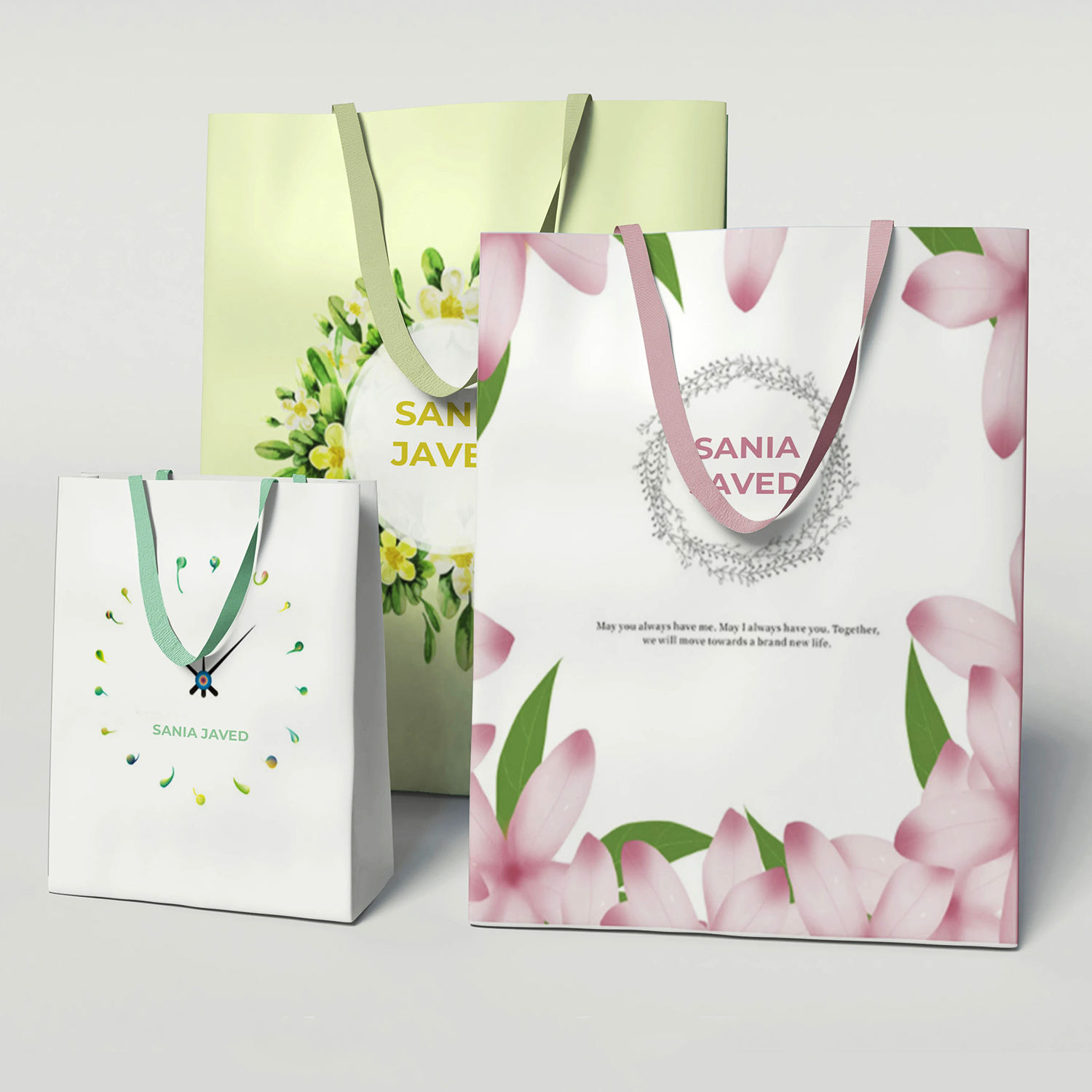
For custom paper bags and retail shopping bags, the design should balance paper strength, handle type, print quality, lamination, logo finish and export packing. A matching sticker, tag or card can also make the full packaging set feel more consistent.
To address this issue, most plastic film printing companies use UV inks. These inks, along with the instant curing properties of ultraviolet light, are intended to improve adhesion. However, challenges still arise during printing:
1. Incomplete UV Ink Curing
In practice, it’s common for UV inks to appear cured on the surface after exposure to UV light, but not fully cured inside. When the ink isn’t fully cured, its adhesion to the film is weak, making it easy to peel off during the tape test.
2. Insufficient Surface Tension on PE/PP Films
Before printing, workers need to check the surface tension of film materials using a Dyne pen or Dyne solution. A surface tension of at least 42 dynes/cm² is required to ensure proper ink adhesion. Films with lower surface tension can lead to poor adhesion.
Films often undergo a corona treatment to increase surface tension. This involves passing the film between two electrodes with high voltage, creating small invisible pits on the film’s surface, making it more receptive to ink.
For the best results, films should be used within one week of production. Films stored for longer periods need to be tested for surface tension before printing.
3. Incompatible Ink Selection
Some film materials, such as PET and BOPP, may have coatings applied by suppliers to improve printability. Different inks use different resins, so even on the same coated surface, results may vary. Film printing companies should consult with suppliers to ensure they are using the correct ink for the coated material.
Solutions to Improve Ink Adhesion
1. Thumb Press Test for Curing
To check if the ink is fully cured, press your thumb firmly on the ink surface and move it back and forth. If ink transfers to your thumb, the ink isn’t fully cured. Causes may include issues with the ink itself or the UV curing system. It’s essential to store UV inks properly—keep them sealed, away from light, and at a temperature around 20°C. UV lamps typically last around 1,000 hours, and using lamps beyond this time can result in incomplete curing.
2. Increase Surface Tension of Film Materials
Some films, such as PE films, have poor ink adhesion. Special surface treatments can increase surface tension, ensuring better ink-film bonding. These treatments can be corona or coating-based. Corona treatment uses high-voltage discharges to raise surface energy, while surface coatings apply an ink-friendly layer.
Different Plastic Films and Their Printing Suitability
Plastic films have different surface characteristics, affecting ink adhesion. The success of the printing process relies on ensuring proper adhesion of the ink to the film.
Polyethylene (PE) Films
PE films typically require corona treatment to improve adhesion. For LDPE, a surface tension between 38-42 mN/m is optimal, while HDPE should range from 40-44 mN/m. LDPE offers good moisture resistance, flexibility, and impact resistance but has poor mechanical strength and oil resistance. PE films must be cooled to below 35°C before winding to avoid ink smearing.
Polypropylene (PP) Films
PP films are more transparent and heat-resistant than PE but also require corona treatment to improve ink adhesion. BOPP is commonly used for printing because of its mechanical strength, moisture resistance, and clarity. However, BOPP’s poor heat sealability and tear resistance make it a challenge for some applications. CPP films, often used for their uniform thickness and heat-seal properties, can be challenging due to their stretchability during printing.
Polyester (PET) Films
PET films are widely used due to their excellent clarity, gloss, and heat resistance. They often require antistatic devices during printing to prevent static buildup. PET films have good adhesion properties but require higher drying temperatures, which should not exceed 85°C.
PVC Films
PVC films have better gloss and ink adhesion than PE and PP films, often not requiring corona treatment before printing. Soft PVC films contain plasticizers, which can migrate into the ink layer over time, causing color shifts or ink transfer.
Nylon Films (PA)
Nylon films are soft and puncture-resistant, making them popular for high-temperature applications such as food packaging. These films are prone to moisture absorption, so they must be printed in controlled environments. Post-printing, they should be sealed and stored quickly to prevent ink degradation.
Glassine (PT)
Glassine is a high-gloss, transparent film often used in candy wrappers due to its excellent printability and lack of static electricity. It has good heat resistance but poor moisture resistance.
Coated Films (KOP, KPA, KPET)
These films can be difficult to print due to uneven coating thickness. Proper tension and pressure settings are crucial to ensure good ink transfer.

Related Packaging Resources
Explore related Reding Packaging product options for custom materials, printing, finishing, samples and export production.
For a project-specific recommendation, send size, material, artwork, finish and quantity details through the Reding Packaging quote form.
 SL
SL  EN
EN  ES
ES  RU
RU  PT
PT  AR
AR  DE
DE  FR
FR  IT
IT  JA
JA  KO
KO  NL
NL  PL
PL  UK
UK  RO
RO  SV
SV  BG
BG