

The straight-line paper box remains a dominant and popular type in the packaging industry today. It is widely used in medical packaging, particularly for tablet medications. Its production involves pressing paperboard to create creases while cutting away unnecessary parts, and then folding and gluing the sides together, either manually or by machine. The most common types include:
For custom packaging boxes, this topic connects directly to structure, paperboard thickness, printing, foil stamping, embossing, spot UV, die-cutting, inserts, sample proofing and export packing. Clear specifications help Reding Packaging quote accurately and keep production quality stable.
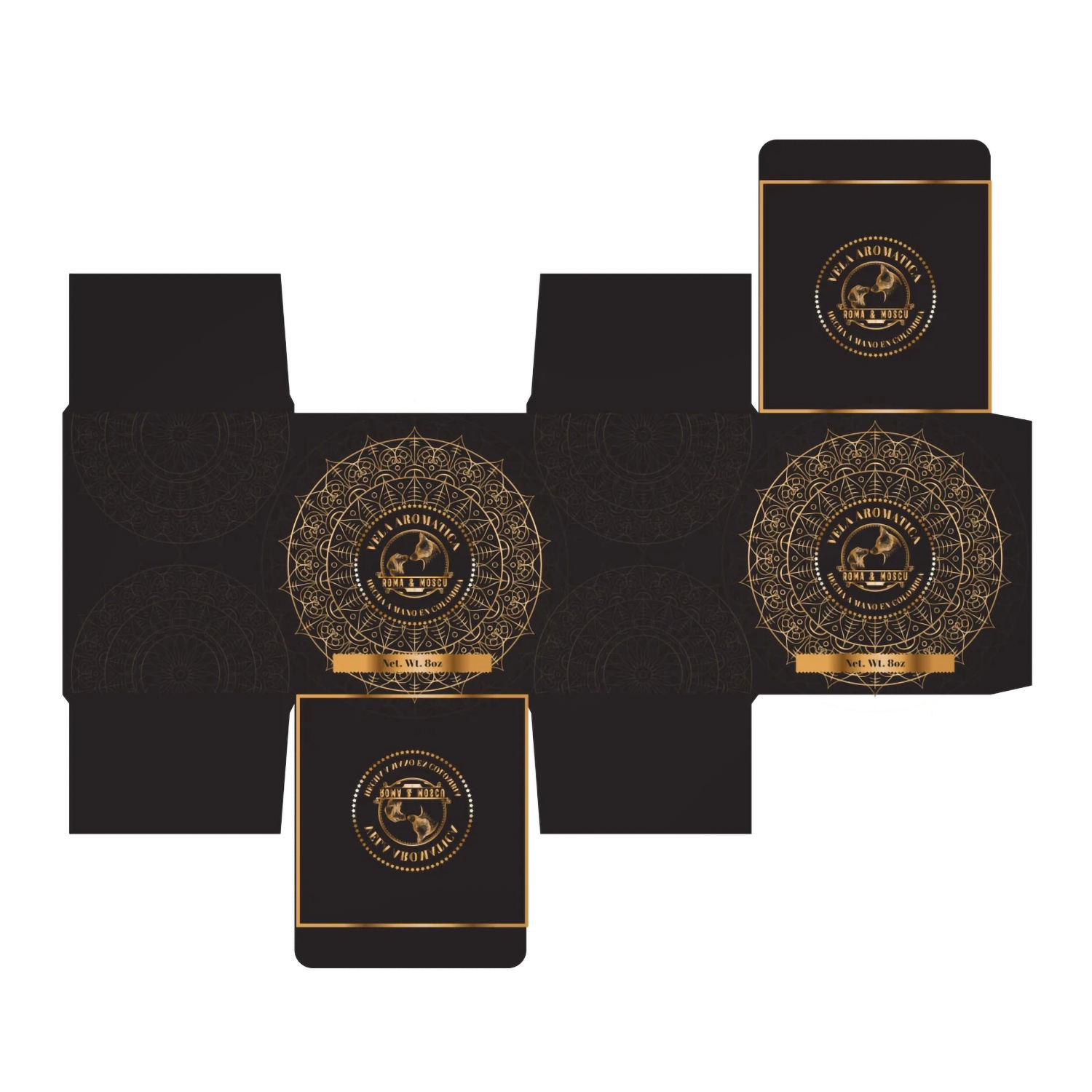
- Barrel-type BoxesThese have a simple structure with no top or bottom covers, forming a cylindrical shape when folded. They are commonly used as outer packaging for chocolates or candy tins.
- Insert-type Cartons and Paper BoxesThis is the hallmark of straight-line boxes, with two variations based on the direction of the flaps: straight-insert and reverse-insert.
- Straight-insert: The flaps (tongues) on the top and bottom of the box insert into the same side of the box.
- Reverse-insert: The top and bottom flaps insert into opposite sides of the box.
- Glued Cartons and Paper BoxesThese do not have an insert structure, instead relying on adhesives to bond the top and bottom together. This type of box is suitable for powdery and granular products and is quite sturdy. It uses less material because there are no insert flaps, and the box has minimal waste from cut-out areas.
- Lock-bottom Cartons and Paper BoxesEvolved from the insert-style box, this design replaces the insert flaps on the bottom with a locking mechanism. This eliminates the need for adhesives and is ideal for heavier products like cosmetics, alcoholic beverages, and pharmaceuticals. Since it does not require bottom flaps, this design saves material compared to the insert type.
- Tray-style Cartons and Paper BoxesTray-style boxes have a tray-like structure, and most non-straight-line paper boxes fall under this category. They have broad applications, from food and snacks to miscellaneous goods, textiles, clothing, and gift items. A key advantage is that tray-style boxes typically don’t require adhesives; instead, they use locking mechanisms built into the structure.
Tray-style Cartons and Paper Boxes: Structural Variations
- Folding Paper BoxesThese are made by folding and gluing, offering the benefits of a compact structure, easy transport, and cost savings.
- Separate Lid and Tray Box: Made from two separate sheets of paper forming a lid and a tray. This traditional structure is versatile and suitable for all types of products.
- Hinged Lid Box: Made from a single sheet of paper where the tray and lid are connected. This design is often used for bulk-packaged items like cookies, candies, and specialty products.
- Assembly Paper BoxesThese do not require adhesive, and based on their structure, they can be divided into two types: double-layer and locking.
- Double-layer Paper Boxes: The four walls of the box are made with double layers, which are then locked together without adhesives. The walls can be reinforced, making this design ideal for heavier items like food, pastries, and gifts, often paired with a transparent or windowed lid.
This overview captures the new trends and innovations in paper box and carton packaging design, showing the increasing emphasis on structural efficiency, material savings, and versatility for various industries.
Related Packaging Resources
Explore related Reding Packaging product options for custom materials, printing, finishing, samples and export production.
For a project-specific recommendation, send size, material, artwork, finish and quantity details through the Reding Packaging quote form.
 RO
RO  EN
EN  ES
ES  RU
RU  PT
PT  AR
AR  DE
DE  FR
FR  IT
IT  JA
JA  KO
KO  NL
NL  PL
PL  UK
UK  SV
SV  SL
SL  BG
BG