
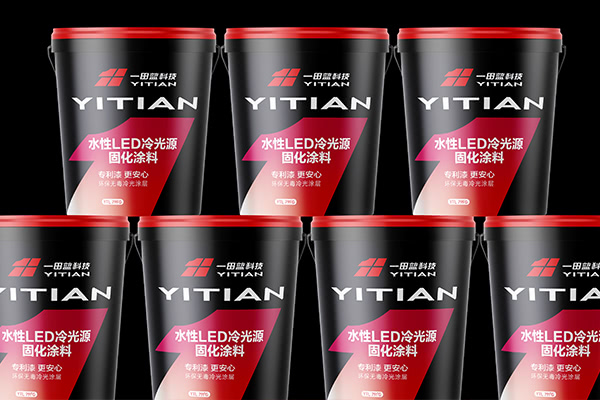
Logo design has several key characteristics:
For packaging brands, visual identity should continue across custom labels, cigar bands, wine labels, stickers, paper bags, tags and boxes. Consistent materials, colors, logo use and finishing choices make the brand easier to recognize in retail and online search results.

- Diversity:
Logos are highly diverse, with numerous types and broad applications. Whether in terms of application forms, structural elements, or expression methods, logos exhibit extensive variety. Logos can be two-dimensional (appearing on any flat surface) or three-dimensional (like reliefs, sculptures, or logos integrated into product packaging or containers). Structurally, some logos directly use objects, while others consist of text, figurative, abstract, or symbolic shapes, or colors. Most logos combine multiple basic forms. As for expression techniques, they are so rich and diverse that they are hard to fully describe and continue to innovate with technological and cultural advances. - Functionality:
The essence of a logo lies in its functionality. Although logos may have aesthetic value, their primary purpose is practical, not decorative. Logos are essential visual tools for human production and social activities. They can be public, such as traffic, safety, or operational signs; or private, such as national flags, emblems, and city logos. Logos are also used by organizations, businesses, and events, such as corporate logos, event logos, or club emblems. Moreover, logos can represent products or services as trademarks, or indicate ownership on personal or collective items through stamps, signatures, monograms, and branding. Logos that hold legal value carry an added responsibility of protecting rights. - Prominence:
A logo’s visibility is another important characteristic. Most logos are designed to attract attention, using strong, vivid colors and clear, simplified shapes. This makes logos stand out and instantly grab the viewer’s eye. - Recognizability:
The most defining feature of a logo is its uniqueness, which makes it easily recognizable. Logos are designed to identify and differentiate things, highlighting characteristics and meaning while showing distinctions and associations. Logos should never be confusing or too similar to others, as this could lead to misinterpretation or error. Therefore, logos must be distinct, memorable, and instantly identifiable. - Artistry:
Logos possess an inherent artistic quality, especially those that are deliberately designed. A good logo not only meets practical requirements but also adheres to aesthetic principles, creating a sense of beauty. Artistic logos tend to leave stronger and more lasting impressions. The artistic quality of a logo is a reflection of the progress of civilization, the increasing cultural sophistication of society, and the need for aesthetic pleasure. - Accuracy:
Whether indicating or symbolizing something, the meaning of a logo must be accurate. Logos should be easily understood and align with people’s psychological expectations and cognitive abilities. Additionally, logos should avoid ambiguity or misinterpretation, particularly when dealing with taboo or sensitive issues. The ability of a logo to convey its message clearly and accurately in an instant is one of its key advantages over written or spoken language. - Durability:
Unlike advertisements or promotional materials, logos are generally designed to have long-term value and are not changed frequently.
Logo design is not just about creating a useful tool; it is also a form of graphic art. Although it shares some similarities with other forms of visual expression, logo design has its own unique artistic rules. To fulfill its function, a logo must embody the above characteristics. Because the demands for simplicity, conciseness, and perfection are so stringent, logo design is often more challenging than other forms of graphic art. A logo must be almost flawless, as finding a better alternative can be extremely difficult.
In addition to general design principles like decorative beauty and orderliness, logo design follows some unique artistic rules:
- Symbolic Beauty:
The art of logo design is a graphic art that focuses on symbolic representation. By refining and processing elements from nature, society, and commonly accepted symbols (including text and colors), logos become distinctive graphic symbols with complete artistic value. This distinguishes logos from decorative graphics or other types of art. In some cases, logos use existing characters, but they differ from purely textual symbols because they are rendered graphically, enhancing their distinct visual, artistic, and universal appeal. Symbolic beauty is one of the most important artistic principles in logo design. - Characteristic Beauty:
Logos reflect the essential characteristics (common traits) of a group of objects rather than the individual traits of a single object. By amplifying and exaggerating these traits artistically, logos achieve a collective artistic effect. This is different from other art forms, which often focus on individual, detailed characteristics. However, logos are not monotonous or overly generalized; the same trait can be expressed in various unique ways, giving each logo its own artistic charm. - Compactness:
Compact composition and simplicity are fundamental structural principles in logo design. Logos are often used on documents, promotional materials, advertisements, and other visual media. A well-designed, compact logo stands out as an independent, complete symbol in any visual context, whether enlarged or reduced. This structural compactness also enhances its decorative beauty. However, simplicity does not mean lack of sophistication; achieving compact beauty requires meticulous artistic refinement. - Simplicity:
The artistic language of logo design must be as simple as possible. Extraneous details—unnecessary symbols, text, or colors—must be eliminated. Only the essential elements that convey the logo’s meaning should be retained. If one artistic method can convey the meaning, a second is unnecessary. Simplicity, combined with elegance, is the true challenge in logo design.
Related Packaging Resources
Explore related Reding Packaging product options for custom materials, printing, finishing, samples and export production.
For a project-specific recommendation, send size, material, artwork, finish and quantity details through the Reding Packaging quote form.
 IT
IT  EN
EN  ES
ES  RU
RU  PT
PT  AR
AR  DE
DE  FR
FR  JA
JA  KO
KO  NL
NL  PL
PL  UK
UK  RO
RO  SV
SV  SL
SL  BG
BG